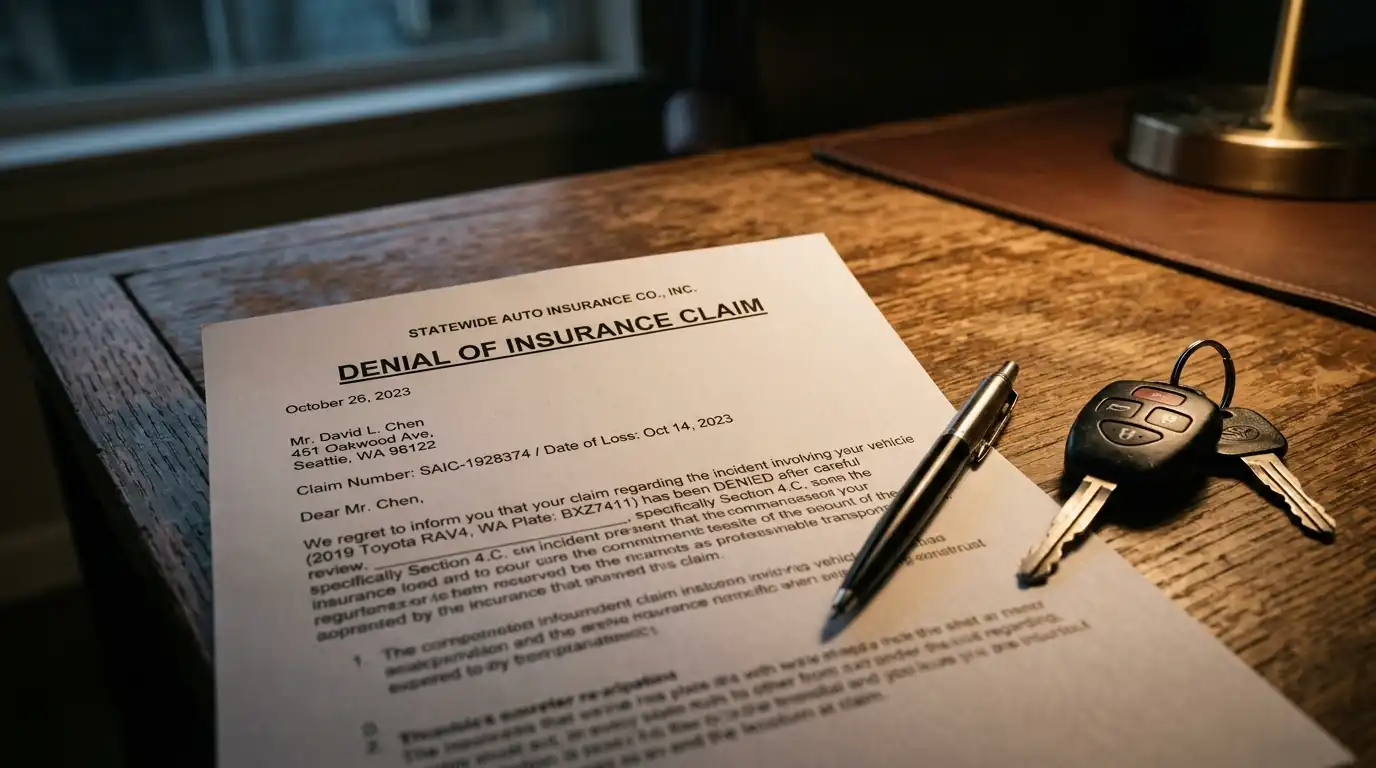
Receiving a claim denial letter from an auto insurance company after a motor vehicle collision can be a overwhelming and financially stressful experience. Whether you are dealing with your own insurer or a third-party liability carrier, insurance companies are profit-driven corporations that carefully evaluate every claim to minimize financial payouts. Understanding why car accident insurance claims get denied and how to appeal is essential for protecting your legal rights and securing the financial recovery you deserve for medical bills and property damage.
1. Common Reasons Insurance Companies Deny Car Accident Claims
Insurance adjusters rely on specific policy language, procedural requirements, and evidentiary gaps to justify claim rejections. Identifying the precise ground for denial is the first step in formulating a persuasive legal appeal.
The most frequent justifications for auto insurance claim denials include:
- Lapses or Exclusions in Coverage: If the policyholder failed to pay insurance premiums on time or if the driver was explicitly excluded from the policy (e.g., an unlisted household member or an unlicensed driver), the insurer will issue an immediate denial.
- Delayed Notification and Filing Deadlines: Most insurance contracts mandate that policyholders report collisions within strict timeframes—often within 24 to 72 hours. Failing to report an accident promptly gives insurers grounds to argue prejudice in their investigation.
- Delayed or Insufficient Medical Documentation: If you delayed seeking emergency medical evaluation after the crash, insurance adjusters often assert that your physical injuries were caused by an unrelated secondary event or were pre-existing.
- Disputed Liability and Fault: When both drivers offer conflicting accounts of a collision and physical evidence is sparse, the opposing insurer will deny liability, claiming their insured driver was not responsible.
- Unapproved Commercial Use Exclusions: Driving a personal vehicle for ride-sharing, food delivery, or commercial freight without a dedicated commercial policy rider frequently results in policy voidance following an accident.
2. Delayed Medical Treatment: The Insurer’s Strongest Defense
 One of the most effective tactics insurance adjusters use to contest bodily injury claims is pointing to gaps in medical care. Adrenaline following a traumatic collision frequently masks soft tissue injuries, whiplash, or mild traumatic brain injuries for days.
When an injured victim waits several weeks to visit a physician, the insurance carrier will argue two key points:
- The physical injuries were not severe enough to require immediate medical intervention.
- An intervening event occurred between the collision date and the medical visit that caused the physical trauma.
To overcome this obstacle, always undergo a comprehensive medical examination immediately following any traffic incident and maintain consistent attendance at all recommended physical therapy or specialist appointments.
For more detailed breakdowns on how immediate evidence collection impacts claims, explore our guides in our Crash News & Investigations section.
3. Navigating Policy Limits and Lack of Coverage
In many catastrophic collisions, a claim is not denied because the driver wasn’t at fault, but because the at-fault driver carried only state minimum liability coverage. If your total medical bills and lost wages exceed the driver’s policy limit, the insurance company will pay up to the maximum limit and issue a formal denial for any remaining amounts.
When facing insufficient liability limits, injured parties must explore secondary recovery avenues, such as:
- Uninsured/Underinsured Motorist (UM/UIM) Coverage: Filing a first-party claim under your own auto policy to bridge the compensation gap.
- Third-Party Liability Claims: Investigating secondary liable parties, such as employer vicarious liability, vehicle component manufacturers, or municipal entities.
To understand the regulatory standards governing insurance carrier obligations, review consumer guidance provided by the National Association of Insurance Commissioners (NAIC).
4. Step-by-Step Guide: How to Appeal a Denied Car Accident Claim
A initial claim denial is not the final verdict. Most insurance companies maintain a structured internal appeals process that allows policyholders and injured claimants to dispute adverse decisions by submitting supplemental evidence.
Step 1: Request a Formal Denial Letter in Writing
Insist that the insurance adjuster provide a detailed written explanation outlining the exact contractual clauses, policy exclusions, or factual findings used to deny your claim. Verbal denials over the telephone are insufficient for building a formal appeal.
Step 2: Gather Supplemental Physical and Expert Evidence
Analyze the specific reasons cited in the denial letter and compile objective evidence that directly counters the insurer’s position:
- Obtain official police accident reconstruction reports and officer field notes.
- Secure detailed doctor notes, diagnostic imaging (MRIs, CT scans), and expert medical causation letters.
- Collect traffic camera footage, dashcam recordings, and neutral eyewitness statements.
Step 3: Submit a Formal Internal Appeal Letter
Draft a formal, factual appeal letter referencing your claim number, policy details, and a clear argument demonstrating why the initial denial was erroneous. Attach your newly gathered evidentiary documentation as indexed exhibits.
For comprehensive legal strategies on communicating safely with insurance adjusters, visit our Accident Claims & Insurance Guides hub.
5. Recognizing Bad Faith Insurance Practices

While insurance companies have a right to investigate claims, they are legally bound by an implied covenant of good faith and fair dealing. When an insurer unreasonably denies, delays, or misrepresents policy provisions to avoid paying a legitimate claim, they may be engaging in bad faith practices.
Common examples of bad faith insurance behavior include:
- Failing to conduct a prompt, thorough, and unbiased claim investigation.
- Misrepresenting policy terms or applicable law to deceive the claimant.
- Offering absurdly low settlement amounts despite clear liability and documented severe losses.
- Failing to approve or deny a claim within statutory timeframes established by state law.
If an insurer acts in bad faith, policyholders may be entitled to file a civil bad faith lawsuit, which can result in damages exceeding the original policy limits, including compensation for emotional distress and statutory attorney fees.
To learn more about how legal representation balances the scales against corporate insurance carriers, explore our firm history on our About Us page, or return to our Homepage for immediate guidance.