When an 80,000-pound commercial tractor-trailer is involved in a severe crash, initial investigations typically center on driver fatigue, distracted driving, speed, or mechanical failure. However, an often overlooked yet critical factor in multi-vehicle collisions is the physical condition of the roadway itself. Poorly maintained roads in commercial truck accidents can transform an otherwise manageable driving maneuver into a catastrophic jackknife, rollover, or lane departure. Determining the legal impact of dangerous road defects requires examining complex liability standards involving government entities, road contractors, and commercial freight carriers.
1. How Poorly Maintained Road Infrastructure Triggers Commercial Truck Collisions
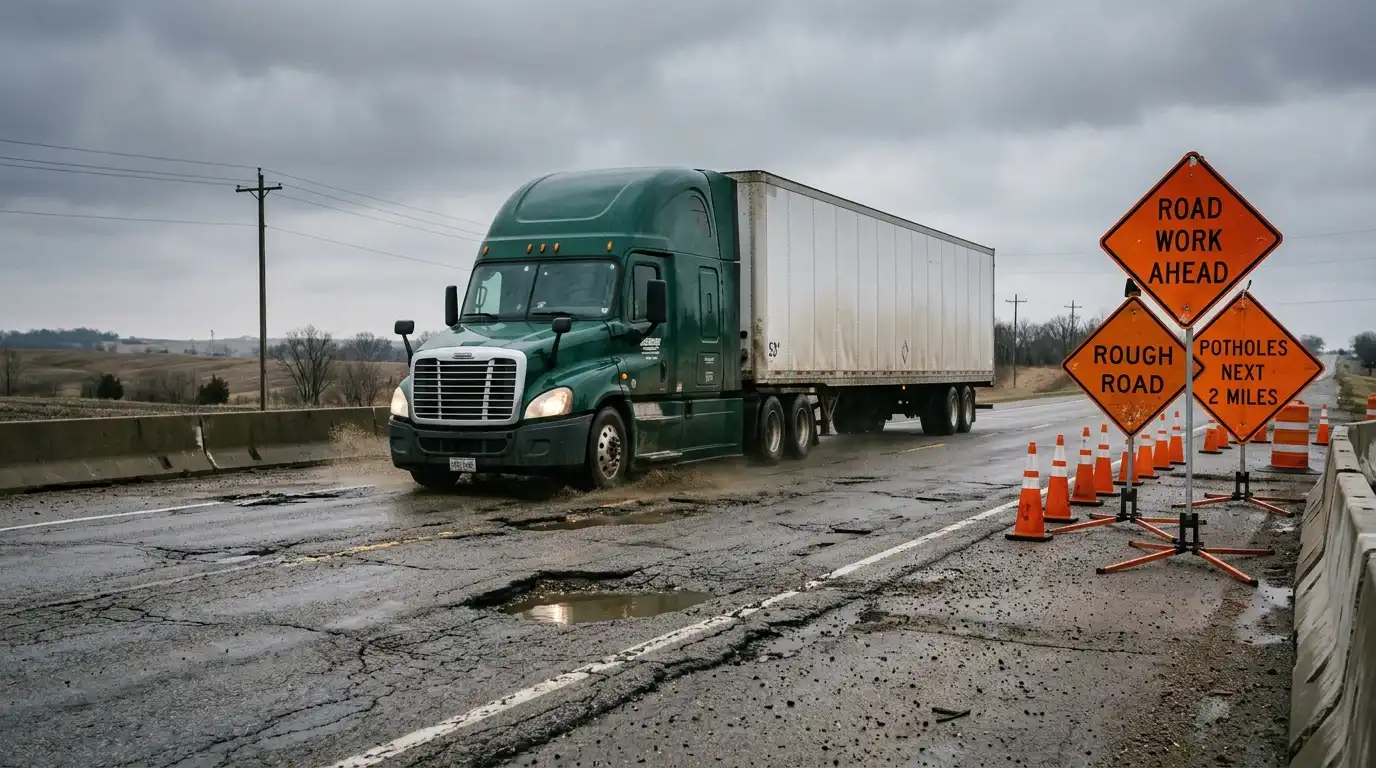
Due to their heavy weight, high center of gravity, and extended stopping distances, commercial trucks are uniquely vulnerable to road surface defects. While a standard passenger sedan might absorb a pothole or severe asphalt rut with minor suspension wear, the same defect can cause a fully loaded semi-truck to lose traction or suffer a catastrophic tire blow-out.
Common infrastructure defects that contribute to heavy truck crashes include:
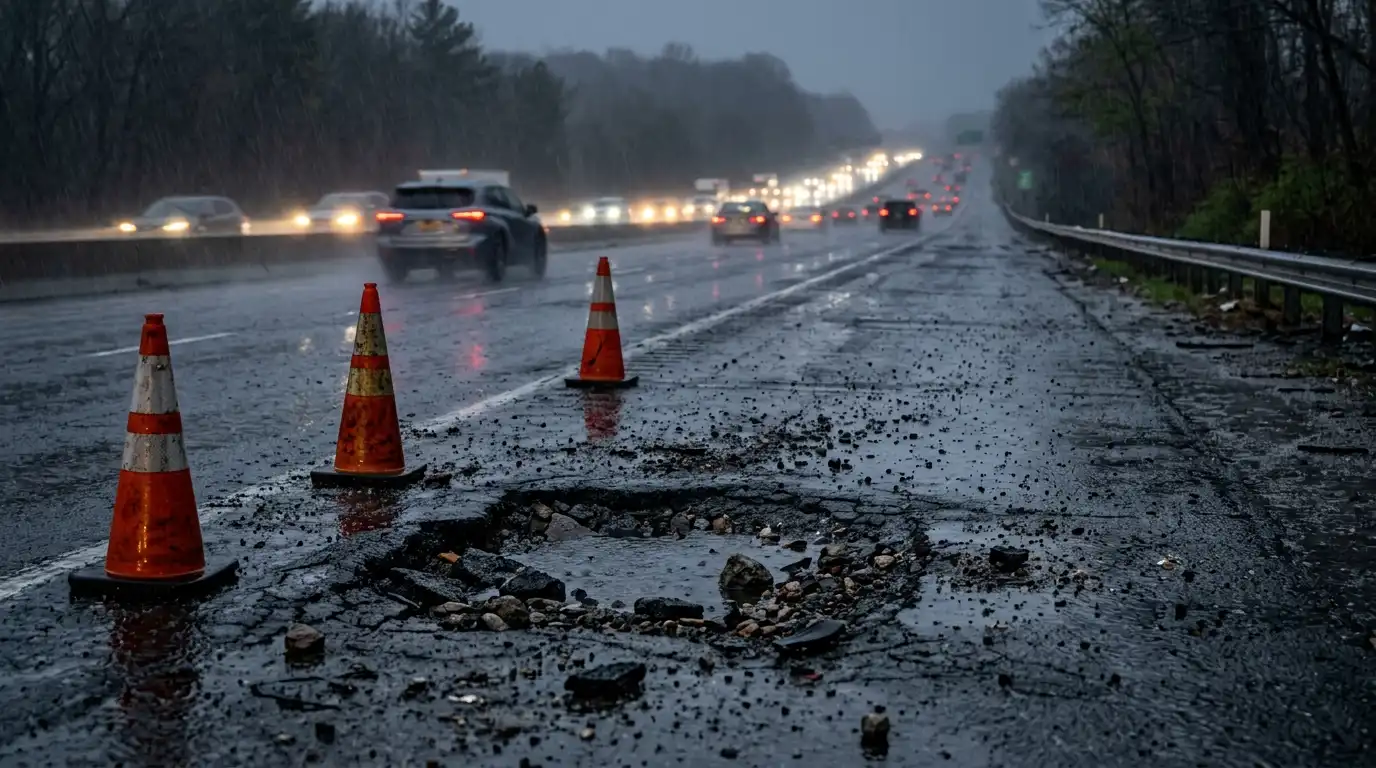
- Severe Potholes and Asphalt Rutting: Deep rutting created by repeated heavy vehicle traffic traps water, leading to hydroplaning or sudden steering wheel jerk that can force a truck out of its lane.
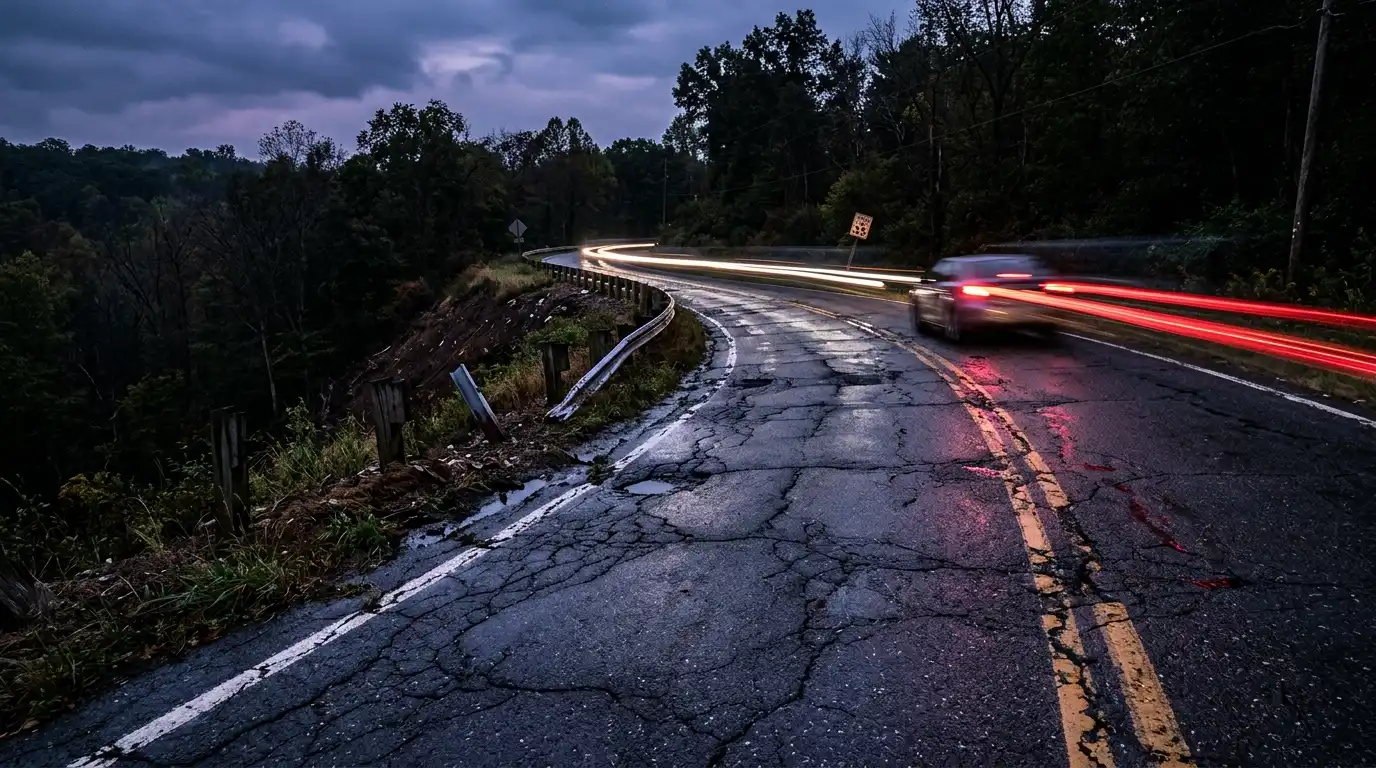
- Inadequate Shoulder Maintenance: Unpaved, soft, or steep drop-offs along highway shoulders can cause a commercial truck’s outer tires to slip, leading to immediate rollover events when the driver attempts to re-enter the roadway.
- Missing or Faded Lane Markings: In poor weather or night driving conditions, degraded reflective pavement markers prevent truck drivers from properly gauging vehicle positioning within tight lanes.
- Defective Guardrails and Median Barriers: Compromised or outdated guardrail systems often fail to contain heavy commercial vehicles, allowing them to breach opposite travel lanes during an initial collision.
- Improper Highway Drainage: Standing water caused by clogged storm drains or poor road grading creates severe hydroplaning hazards for heavy freight haulers.
2. The Legal Complexity of Proving Infrastructure Fault
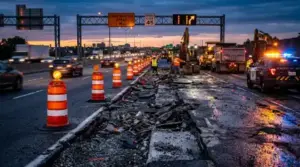 Establishing legal fault when road defects contribute to a commercial crash is far more intricate than standard driver-versus-driver insurance claims. In a traditional collision, liability is determined by demonstrating negligence under state motor vehicle codes. When defective infrastructure is involved, attorneys and investigators must evaluate whether a public municipality, state department of transportation (DOT), or private construction contractor breached a legal duty to maintain safe roadways.
To successfully hold a government body or highway maintenance contractor accountable, evidence must prove three core elements:
- The Existence of an Unreasonable Hazard: Demonstrating that the road defect presented a documented, dangerous condition beyond ordinary wear and tear.
- Notice of the Defect: Proving the responsible government agency had actual or constructive notice of the road hazard prior to the crash and failed to repair or warn drivers within a reasonable timeframe.
- Direct Causation: Establishing through physical evidence and accident reconstruction that the road defect was a primary or substantial contributing factor in the truck crash.
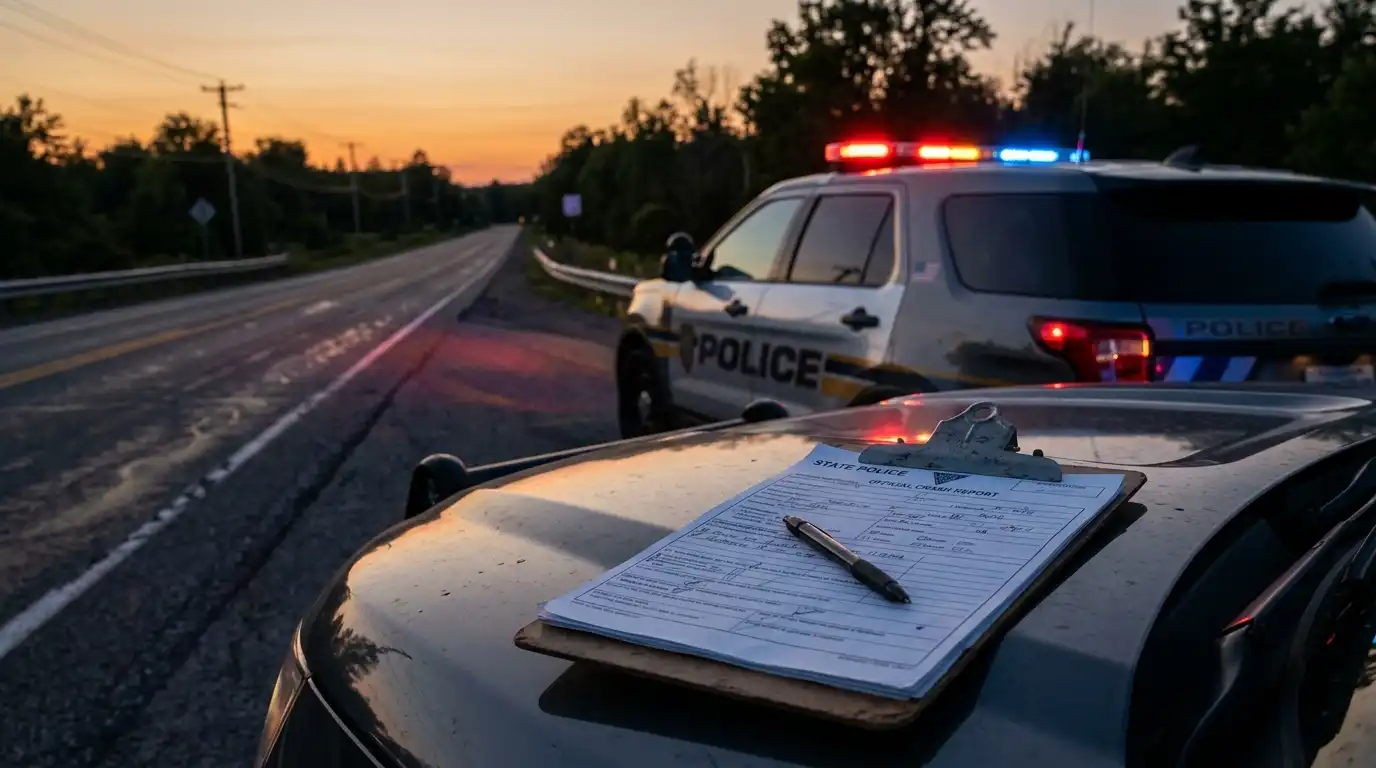
For a detailed analysis of how crash scene documentation impacts complex liability investigations, read our guide on Crash News & Investigations.
3. Government Sovereign Immunity and Claims Deadlines
One of the most significant legal hurdles when pursuing claims involving poorly maintained roads is the legal doctrine of sovereign immunity. Historically, sovereign immunity protected government entities from being sued by private citizens. While modern state and federal tort claims acts allow citizens to file lawsuits against government agencies for negligence, strict conditions apply.
Key procedural constraints include:
- Shortened Notice of Claim Deadlines: Unlike standard personal injury statutes of limitations—which typically range from one to three years—claims against government entities often require a formal “Notice of Claim” to be filed within 60 to 180 days of the collision. Failure to meet this tight deadline can permanently bar recovery.
- Statutory Damages Caps: Many state jurisdictions enforce financial liability caps on total damages awarded against state or municipal agencies, regardless of the severity of the injuries or economic loss.
- Discretionary Function Exemptions: Government entities often argue that decisions regarding infrastructure budget allocations and maintenance schedules are immune from judicial review under discretionary function defenses.
4. Shared Liability: Trucking Companies vs. Maintenance Agencies
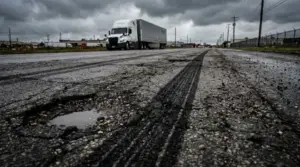
It is rare for a commercial truck accident to be caused solely by a road defect. In most litigation scenarios, defendants point fingers at one another to minimize exposure. A government entity may argue that the truck driver was traveling above the posted speed limit for road conditions, while the commercial trucking company will contend that the road defect left the driver with zero evasive options.
Commercial carriers are subject to strict regulations enforced by the Federal Motor Carrier Safety Administration (FMCSA). Under federal regulations, commercial drivers are required to adjust their vehicle speed and driving maneuvers when encountering adverse road or weather conditions. If a professional truck driver recognizes a dangerous road surface but fails to slow down appropriately, comparative negligence rules will distribute liability between the driver, the trucking company, and the entity responsible for road maintenance.
5. Preserving Evidence in Road Defect Investigations
Physical evidence on highways degrades rapidly. Municipalities quickly repair potholes after a major crash, weather washes away tire skid marks, and temporary construction signage is moved. To preserve vital evidence when road conditions contribute to an accident, immediate legal and forensic steps are necessary:
- Subpoenaing Maintenance and Inspection Records: Obtaining internal DOT repair logs, public road complaints, inspection histories, and work orders to establish prior notice of the defect.
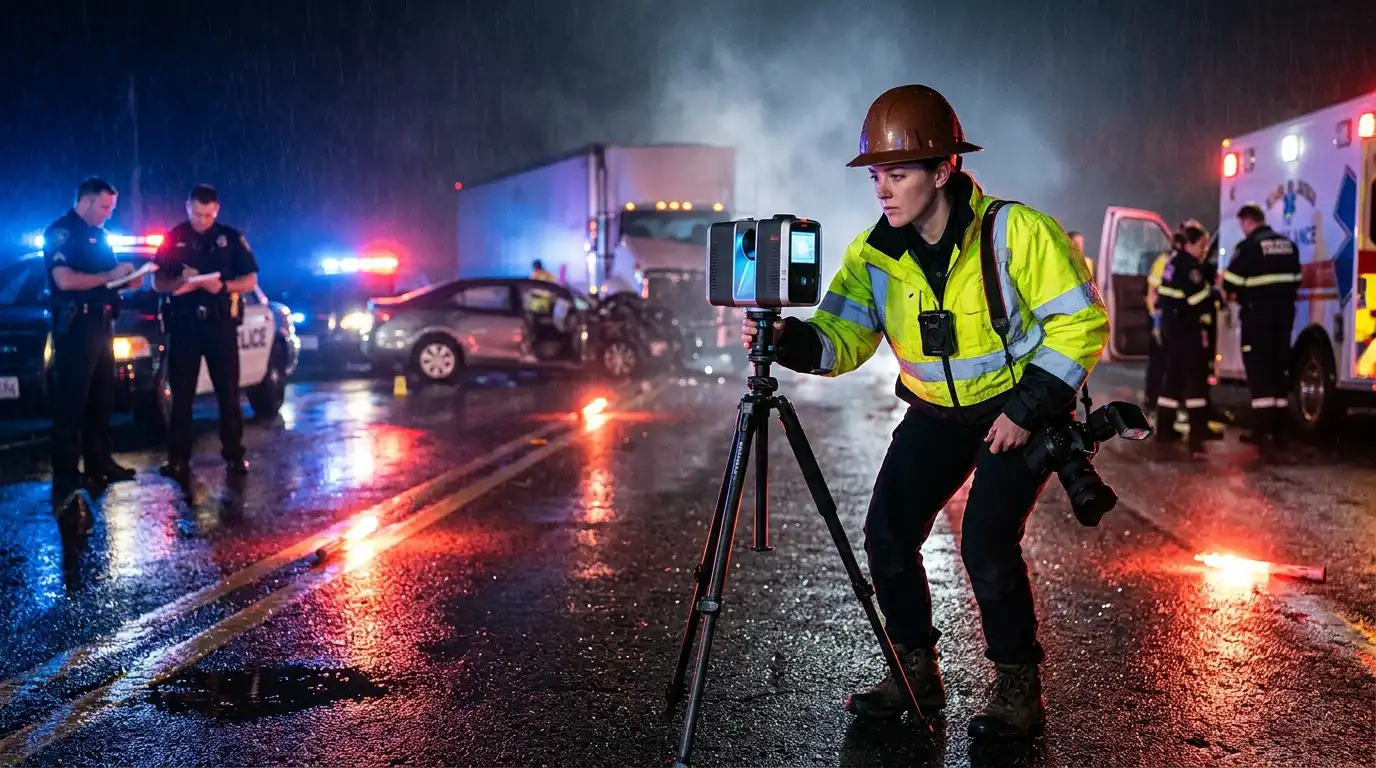
- Engaging Civil Engineers and Accident Reconstructionists: Utilizing high-resolution 3D laser scanners and drone photography to record roadway geometry, friction coefficients, slope angles, and pavement depth before repairs occur.
- Filing Public Records Requests: Utilizing Freedom of Information Act (FOIA) and state open records requests to review municipal communications and past accident reports at the specific road location.
To learn more about changing infrastructure safety standards, highway design regulations, and driver safety campaigns, explore our full library of analysis in our Road Safety & Infrastructure hub.