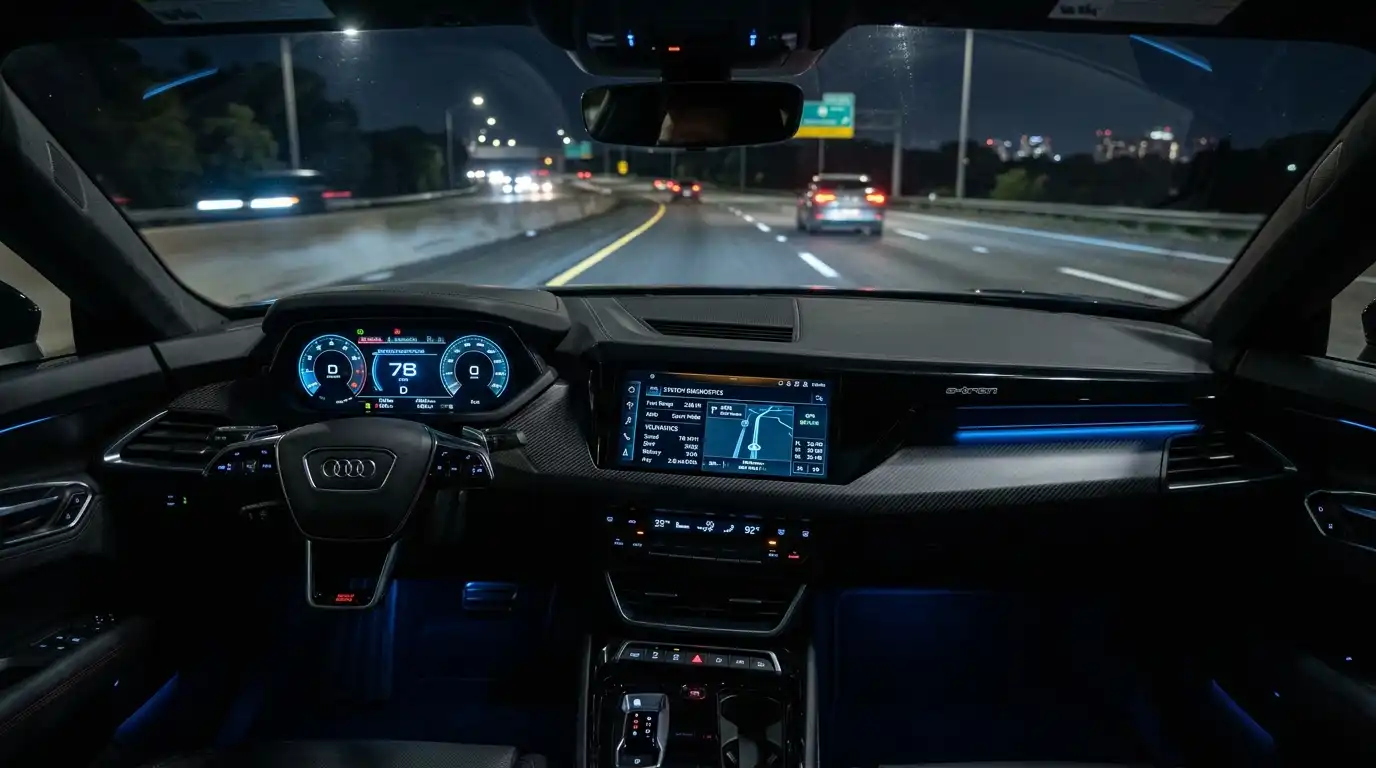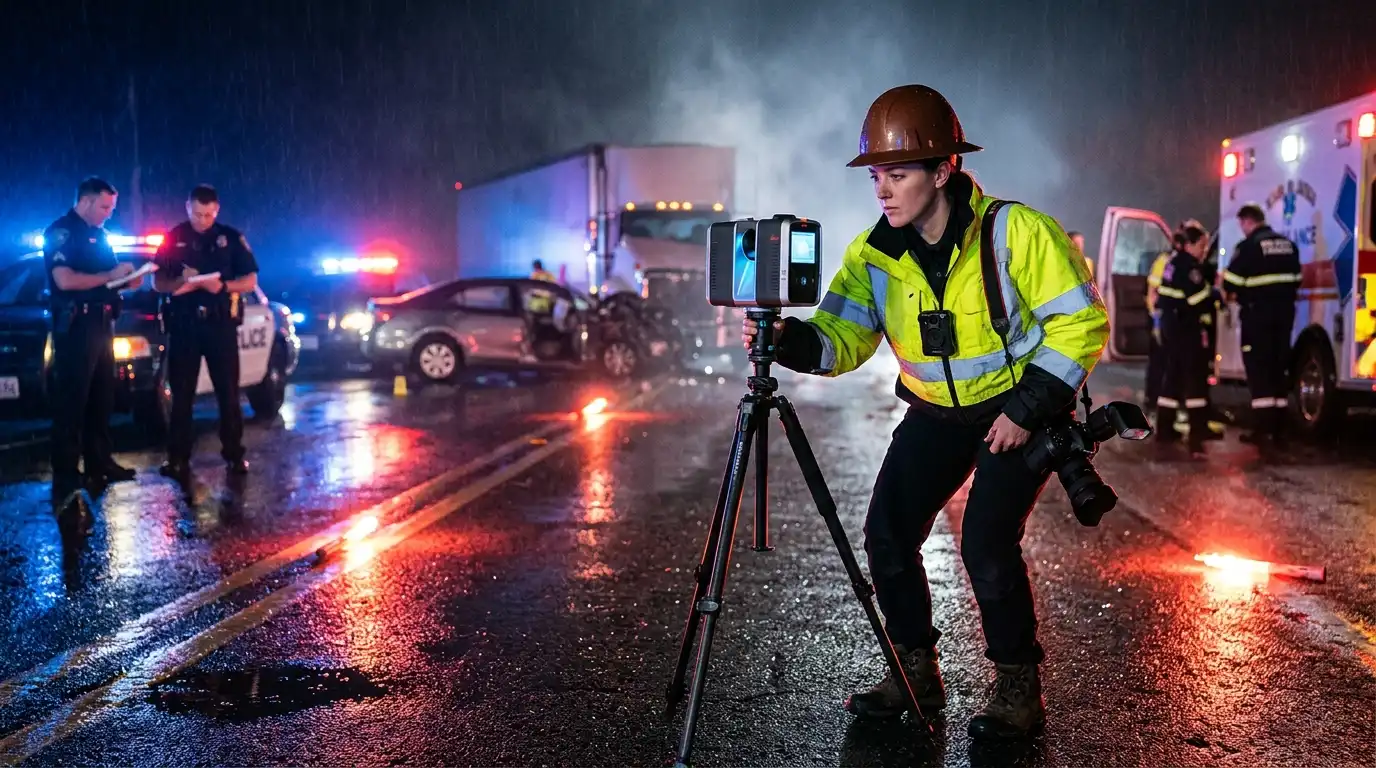
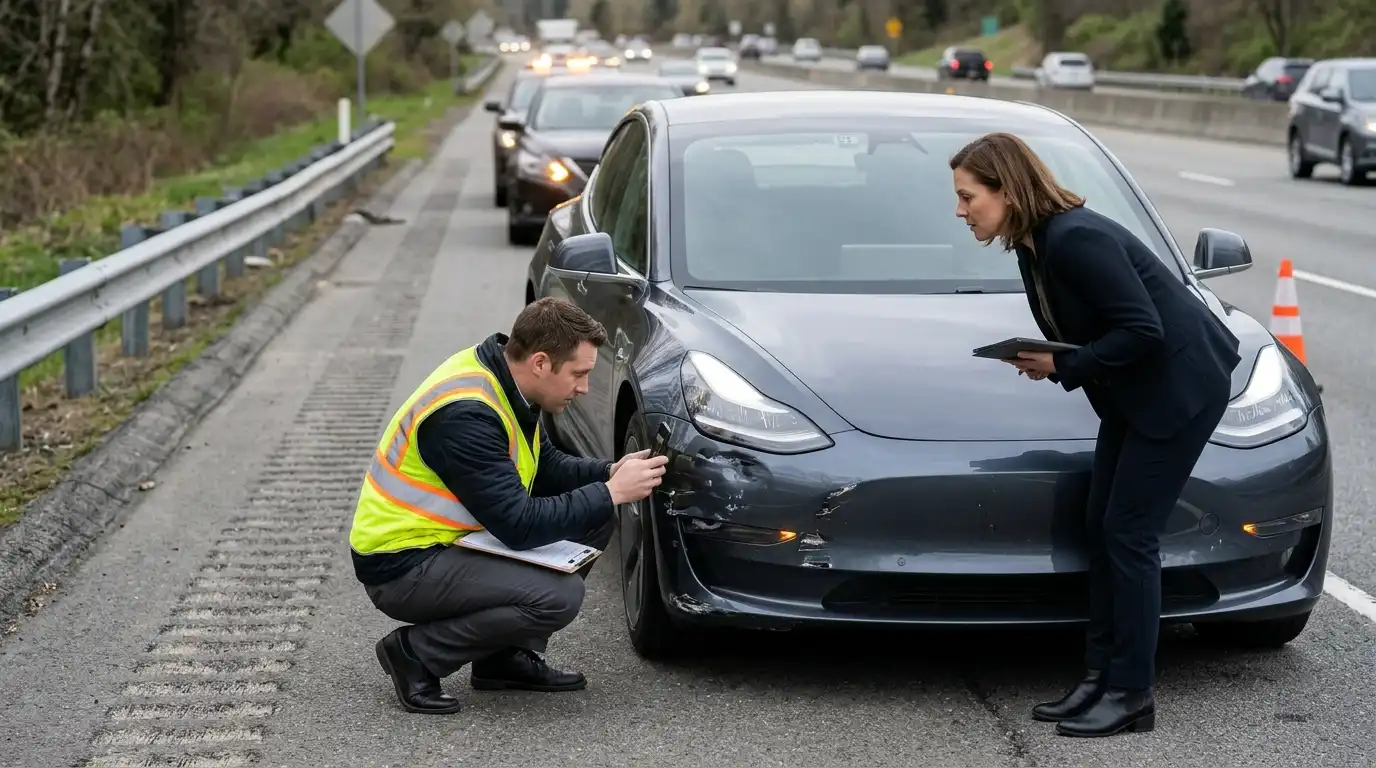
However, as driver-assist systems become more widespread, they create a complex legal challenge when accidents occur. Drivers often misinterpret these convenience features as fully autonomous driving systems, leading to over-reliance and delayed reactions during critical emergencies. When an ADAS feature fails to detect an obstacle, disengages unexpectedly, or triggers a phantom braking event, determining financial and legal fault becomes a multifaceted inquiry involving traffic laws, system limitations, and product liability.
Understanding ADAS Levels and Legal Responsibility
To evaluate crash liability, legal experts and law enforcement rely on the SAE levels of driving automation established by the Society of Automotive Engineers. These six levels range from complete manual operation to full autonomy, establishing clear boundaries regarding who—or what—is actively responsible for operating the vehicle:
- Level 0 (No Automation): The human driver handles all driving tasks, though the vehicle may provide temporary warnings or emergency interventions, such as blind-spot alerts.
- Level 1 (Driver Assistance): The vehicle assists with either steering or acceleration/braking (e.g., standard cruise control or lane-keeping assist), but the human driver monitors the road continuously.
- Level 2 (Partial Automation): The vehicle simultaneously controls steering and acceleration (e.g., highway pilot features, lane centering paired with adaptive cruise control). However, NHTSA driver assistance guidelines explicitly state that Level 2 features require the human driver to remain fully attentive and ready to take immediate manual control at all times.
- Level 3 to Level 5 (Conditional to Full Automation): The automated system executes dynamic driving tasks under specified conditions. While true Level 3 consumer vehicles remain limited, higher levels shift primary operational control from human drivers to vehicle systems.
Because the vast majority of consumer vehicles on the road today operate at Level 1 or Level 2, courts generally maintain that the human occupant remains the primary vehicle operator. Consequently, a driver cannot avoid negligence liability simply by claiming their vehicle’s safety features failed to prevent a crash.
Human Error vs. Product Liability: Identifying Fault
Determining liability after a crash involving driver-assist technology requires separating driver distraction from genuine hardware or software defects. In many instances, fault falls into one of three distinct legal categories:
1. Driver Negligence and Over-Reliance
Automakers frequently market ADAS capabilities using enticing terminology that can mislead consumers into assuming the vehicle drives itself. When drivers engage in texting, taking hands off the wheel, or engaging in secondary tasks while relying on driver-assist features, they breach their legal duty of care. Under standard personal injury law, a driver who fails to intervene when an assistance system misinterprets a hazard remains civilly liable for resulting damages.
2. Product Defects and Manufacturer Liability
While human drivers hold primary responsibility in Level 2 systems, vehicle manufacturers and component suppliers are not immune from accountability. A product liability claim may arise if evidence demonstrates that an ADAS feature suffered from:
- Design Defects: Flaws in system architecture, such as radar sensors incapable of recognizing stationary objects at highway speeds.
- Manufacturing Defects: Misaligned camera modules, loose wiring, or faulty sensor components installed during assembly.
- Inadequate Warnings / Marketing Claims: Misleading instructions or software updates that fail to inform drivers of system operational limits or handoff expectations.
3. Third-Party Negligence and Calibration Errors
ADAS components rely on delicate calibration. Following routine windshield replacements, body repairs, or wheel alignments, technicians must recalibrate front-facing cameras and radar arrays using precise targets. If an auto repair facility fails to properly recalibrate these safety systems according to manufacturer specifications, the shop may be held liable if a miscalibrated sensor subsequently causes a collision.
The Crucial Role of Vehicle Data and Telematics
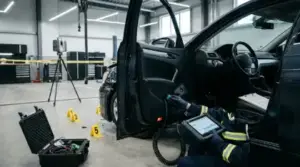
Investigating crashes involving advanced safety technology requires specialized evidence collection that goes beyond physical skid marks and witness statements. Modern vehicles function as mobile data centers, logging critical system telemetry in the moments surrounding an impact.
Key electronic evidence sources include:
- Event Data Recorders (EDR): Often referred to as the vehicle’s “black box,” the EDR records operational metrics during a crash sequence, including vehicle speed, brake application, throttle position, steering angle, and seatbelt usage.
- ADAS Log Files: Onboard computers record precise timestamps detailing when driver-assist features were engaged, when system warnings were issued, and whether driver steering torque was detected on the wheel prior to impact.
- Sensor and Camera Telemetry: High-end autonomous and semi-autonomous systems store external camera feeds and radar point-cloud data capturing road conditions, obstacle detection, and system decision logs.
Because vehicle telematics data can be overwritten or erased during post-accident repairs or routine vehicle power cycles, preserving this digital evidence immediately following a crash is essential to building a solid legal claim.
Protecting Your Rights After an ADAS-Related Crash
If you or a loved one is involved in a collision where vehicle safety technology or autonomous driver assistance played a role, taking prompt, structured action is vital:
- Report the Incident Accurately: Ensure responding law enforcement officers note whether driver-assist features were engaged at the time of the crash.
- Preserve the Vehicle: Avoid altering, repairing, or releasing the vehicle until an independent forensic expert can download EDR and ADAS telemetry.
- Seek Experienced Legal Representation: ADAS collision claims involve intricate intersections of personal injury law, complex automotive engineering, and product liability.
As vehicle technology continues to evolve, understanding the balance between driver duty and system limitations remains the cornerstone of pursuing fair recovery. If you have questions about a collision involving automated safety features, consulting an experienced personal injury attorney ensures your rights and evidence are protected from day one.